How Aluminum Castings achieve strength through refined techniques
Exploring the Convenience and Applications of Metal Casting in Modern Market
Metal Casting are indispensable to many markets, showing their adaptability in applications ranging from auto parts to aerospace engineering. Numerous spreading procedures enable for the creation of complex styles and long lasting components. As sectors progress, advancements and lasting practices are improving the landscape of Metal Casting. This transformation raises essential concerns regarding the future role of Metal Casting in manufacturing and design effectiveness. What advancements might redefine sector standards?
Introduction of Metal Casting Procedures
Metal Casting has developed significantly over the years, its basic processes remain crucial in modern-day production. Metal Casting entails several key techniques, consisting of sand casting, financial investment spreading, and pass away spreading, each tailored to particular applications and materials. Sand casting, among the oldest techniques, makes use of sand molds to shape molten steel, making it optimal for large parts. Investment casting, known for its accuracy, utilizes wax patterns covered with ceramic to accomplish elaborate styles, frequently utilized in aerospace and clinical markets. Pass away spreading, identified by high pressure, enables the rapid manufacturing of complicated forms with exceptional surface coatings, commonly made use of for automotive parts. Each process supplies distinctive benefits pertaining to complexity, expense, and material compatibility, enabling makers to pick the most appropriate method for their needs. Recognizing these processes is important for enhancing manufacturing performance and achieving preferred product requirements in an affordable market.
Secret Industries Using Metal Casting
Metal Casting play an essential function in various key industries, driving innovation and performance. The vehicle industry is just one of the largest consumers of Metal Casting, utilizing them for engine components, transmission housings, and architectural components. In aerospace, accuracy castings are vital for airplane engines and architectural aspects, making sure safety and efficiency. The energy market additionally greatly counts on Metal Casting for generator components in power generation, as well as for oil and gas applications where longevity is paramount. Additionally, the construction sector utilizes Metal Casting for structural structures, fittings, and decorative components. Production devices and machinery benefit from spreadings, which provide reputable and robust parts crucial for procedure. Ultimately, the medical field uses specialized castings for medical instruments and implants, showcasing the versatility of Metal Casting throughout diverse applications. Each of these markets demonstrates the value of Metal Casting ahead of time technology and conference certain practical needs.
Benefits of Metal Casting in Manufacturing
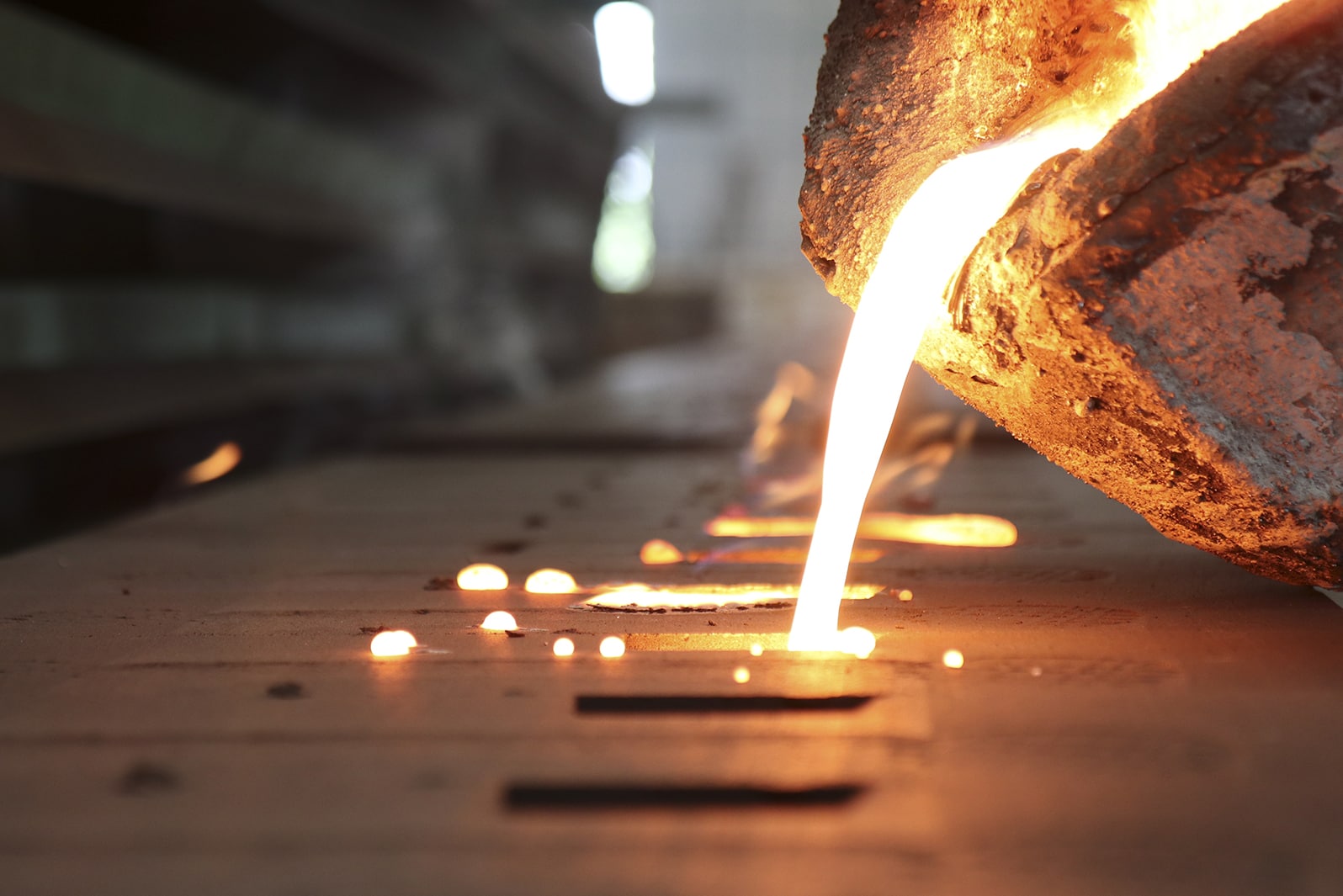
The advantages of Metal Casting in manufacturing are various, adding greatly to the effectiveness and effectiveness of manufacturing processes throughout various industries. One significant advantage is the ability to develop intricate forms that would be challenging or difficult to attain via other producing techniques. This complexity permits better layout adaptability, making it possible for engineers to optimize components for efficiency and capability.
In addition, Metal Casting can create premium get rid of exceptional surface coatings and dimensional precision, minimizing the demand for considerable post-processing. Metal Castings. The procedure is additionally very scalable, suiting both small and big manufacturing runs without considerable adjustments in tooling or setup
Moreover, Metal Casting commonly result in less material waste contrasted to traditional machining techniques, advertising more sustainable production practices. In general, the versatility and effectiveness of Metal Casting make them a preferred option in fields such as automotive, aerospace, and construction, improving performance and minimizing expenses.
Technologies in Metal Casting Technologies
As innovations in technology proceed to reshape the production landscape, technologies in Metal Casting are arising to boost efficiency, accuracy, and sustainability. Recent developments include the assimilation of computer-aided layout (CAD) and computer-aided manufacturing (WEB CAM) systems, which permit for elaborate styles and decreased production times. In addition, 3D printing innovation has actually changed mold-making, allowing quick prototyping and modification without the requirement for standard tooling.
The usage of advanced alloys and clever products is broadening the efficiency capacities of cast items, resulting in lighter and stronger parts. Automation and robotics are likewise playing a considerable role, enhancing procedures and lessening human error in manufacturing environments. These technologies not only enhance the quality of Metal Casting but likewise add to cost-effectiveness with decreased waste and shorter preparations. As the industry develops, these technical advancements promise to redefine the future of Metal Casting.
Lasting Practices in Metal Casting
Sustainable methods in Metal Casting are gaining prestige as manufacturers seek to reduce their environmental effect while keeping performance. Key techniques include making use of recycled materials, which considerably minimize raw product consumption and power use. By incorporating scrap metal right into the casting process, companies can lower their carbon footprint and advertise source performance.
In addition, developments in energy-efficient technologies, such as electrical heaters and improved insulation, are being taken on to enhance energy use throughout manufacturing. Manufacturers are progressively implementing water preservation techniques to reduce waste and warranty lasting water monitoring methods. - Metal Castings
The adoption of ecologically pleasant casting products, such as naturally degradable binders, is on the increase, replacing standard compounds that may launch dangerous discharges. On the whole, the commitment to sustainability in Metal Casting not only addresses environmental problems yet likewise enhances the sector's competitiveness and long-lasting stability in a quickly progressing market.
Instance Researches: Success Stories of Metal Castings
The impact of Metal Casting can be seen across various markets, highlighting their versatility and efficiency. In the automotive sector, ingenious spreading strategies have caused lighter and a lot more fuel-efficient vehicles, while aerospace advancements have led to innovative elements that enhance performance and safety and security. Additionally, the medical area has gained from precision spreadings that enhance gadget performance and client end results.
Automotive Sector Innovations
Advancement in the auto sector has actually been especially boosted by developments in Metal Casting methods, which have actually permitted click resources makers to create lighter, much more resilient parts. As an example, a leading automotive company executed high-pressure die casting to produce engine blocks that are not just lighter however also exhibit remarkable thermal effectiveness. This change considerably enhanced gas economic situation in their newest lorry designs. An additional case research highlights the usage of sand spreading for generating detailed transmission parts, causing boosted performance and integrity. In addition, the intro of 3D printing in Metal Casting processes has enabled the manufacturing of intricate geometries, assisting in design adaptability and lowering waste. Jointly, these developments showcase exactly how Metal Casting are improving the vehicle landscape, driving improvements in effectiveness and sustainability.
Aerospace Element Advancement
Developments in Metal Casting have actually additionally made considerable strides in the like it aerospace sector, where the demand for high-strength and light-weight components is essential. Companies have efficiently utilized advanced casting methods to produce parts such as turbine blades and architectural frameworks. For instance, a leading aerospace supplier applied financial investment casting to produce complex forms that enhance efficiency while lessening weight. This approach not just lowered production prices yet additionally enhanced the longevity of the elements. One more notable situation included the use of 3D printing incorporated with Metal Casting, enabling fast prototyping and faster turnaround times for new styles. These success stories illustrate the transformative effect of Metal Casting technologies, promoting innovation and performance in aerospace manufacturing.
Clinical Tool Applications
Metal Casting have actually emerged as a pivotal innovation in the advancement of clinical devices, offering services that enhance both functionality and individual safety. Study highlight the effective combination of Metal Casting in different applications. Orthopedic implants made via accuracy casting methods use improved strength and biocompatibility, greatly boosting patient end results. In another circumstances, custom medical instruments are produced using Metal Casting, permitting customized options that fulfill details step-by-step requirements. In addition, making use of lightweight metal alloys in diagnostic equipment has actually caused raised mobility and ease of use in professional setups. These success tales highlight the crucial role of Metal Casting beforehand clinical technology, making certain tools are not only reliable however also secure for person treatment.
Future Trends in Metal Casting Applications
The future of Metal Casting applications is positioned for significant change with the assimilation of additive production and wise manufacturing technologies. These innovations assure to improve efficiency and accuracy in casting processes while addressing the growing need for lasting methods. As sectors evolve, the adoption of ingenious strategies will likely redefine standard casting approaches and add to an extra eco liable method.
Additive Production Combination
As industries look for innovative remedies to improve manufacturing efficiency and decrease waste, the combination of additive manufacturing right into Metal Casting procedures emerges as a transformative fad. This harmony allows for the development of complex geometries that standard approaches battle to attain. By using 3D printing strategies, producers can create mold and mildews and cores with intricate styles, greatly lowering lead times and material usage. Additionally, additive production promotes rapid prototyping, making it possible for quicker iterations and modifications in layout. This advancement not just streamlines manufacturing yet additionally motivates modification, accommodating specific customer requirements. As this assimilation proceeds to advance, it holds the possible to redefine Metal Casting applications, providing enhanced precision, decreased expenses, and a much more sustainable strategy to manufacturing in various industries.
Smart Manufacturing Technologies
Embracing smart production modern technologies marks a considerable shift in the future of Metal Casting applications. These improvements incorporate automation, information analytics, and the Web of Things (IoT), enhancing production efficiency and quality control. By making use of sensing units and real-time surveillance, suppliers can enhance processes, minimize waste, and forecast devices failures before they occur. In addition, smart innovations enable far better customization of castings, allowing for more complex layouts and faster turnaround times. The fostering of expert system in high quality guarantee further improves defect detection, guaranteeing higher item standards. As these technologies progress, they will not just improve operations however also foster technology in Metal Casting, placing companies to meet the demands of a rapidly altering industrial landscape.
Lasting Casting Practices
Although conventional Metal Casting techniques have long been indispensable to manufacturing, an expanding focus on sustainability is improving techniques within the market. Modern foundries are increasingly embracing green products and procedures, such as utilizing recycled steels, which considerably decreases the ecological impact. Furthermore, improvements in modern technology enable a lot more efficient power use, minimizing waste and discharges throughout production. The unification of additive production strategies additionally enhances sustainability by reducing product waste and enabling intricate layouts that were previously unachievable. Sector stakeholders are focusing on life cycle evaluations to review the ecological effect of Metal Casting. As the demand for greener services rises, lasting spreading methods are poised to come to be a criterion in Metal Casting, cultivating a much more cutting-edge and liable manufacturing landscape.
Regularly Asked Questions
What Materials Are Generally Used in Metal Casting?
Common materials made use of in Metal Casting consist of light weight aluminum, iron, magnesium, steel, and bronze. Each product uses unique residential or commercial properties, making them suitable for numerous applications, from automobile elements to intricate imaginative designs in manufacturing procedures.
How Does Steel Casting Compare to Machining Processes?
Metal Casting commonly provides greater style adaptability and can generate intricate forms a lot more effectively than machining. However, machining offers greater precision and finer surface area coatings, making each process ideal for different applications in production.
What Are the Regular Costs Connected With Metal Casting?
Common expenses connected with Metal Casting differ based on variables like complexity, product, and volume. First setup can be high, yet large manufacturing runs substantially lower per-unit costs, making it economically viable for various applications.
How much time Does the Metal Casting Refine Take?
The Metal Casting procedure typically takes anywhere from a few hours to a number of weeks, relying on elements such as the intricacy of the layout, check over here the material used, and the dimension of the cast object.
What Precaution Are Required in Metal Casting Facilities?
Metal Casting facilities require precaution such as proper ventilation, protective gear, emergency situation tools, and normal training. In addition, maintaining equipment and adhering to security procedures ensures a more secure working setting for all personnel involved in the process.
Metal Casting involves a number of key techniques, consisting of sand spreading, financial investment casting, and pass away casting, each tailored to specific applications and products. Inevitably, the medical area makes use of specialized castings for medical instruments and implants, showcasing the adaptability of Metal Casting across varied applications. As innovations in modern technology proceed to improve the manufacturing landscape, developments in Metal Casting are emerging to enhance effectiveness, precision, and sustainability. As markets look for innovative solutions to improve production effectiveness and decrease waste, the assimilation of additive manufacturing into Metal Casting processes emerges as a transformative trend. Embracing smart production modern technologies marks a considerable change in the future of Metal Casting applications.